Euless homeowner guide
What to Do in the First 24 Hours After Water Damage in Your Euless Home
A burst pipe, overflowing appliance or storm leak can leave you wondering what to do first. Start with safety, stop the source only when it is safe, and arrange help before hidden moisture becomes a bigger problem.
Call (817) 330-7905The first 24 hours are a useful action window—not a reason to wait. For an Euless home with active water intrusion, the priorities are protecting people, limiting further damage and documenting what happened. You do not need to know which restoration service to request before making the call.
1. Check for danger before entering a wet room
Keep children and pets away from standing water. Do not enter an area with sagging ceilings, exposed wiring, wet outlets or water touching electrical appliances. If you smell gas, see sparking or face an immediate threat to life, leave the property and call 911 from a safe location.
Never walk through water to reach the breaker panel or unplug equipment. An electrician or emergency responder may need to isolate the power. Sewage backups and outdoor floodwater also require caution: avoid contact and do not assume water is clean because it looks clear.
2. Stop the water source only if you can reach it safely
For a plumbing leak, turn off the fixture’s supply valve or the main water shutoff if it is accessible from a dry, safe location. Arrange for a plumber to repair the failed pipe or connection. For roof leaks and storm intrusion, do not climb onto a wet roof or enter an unstable attic.
If the cause is uncertain, describe where the water appeared and whether it is still spreading when you call. A leaking water heater, washing machine hose and rain-driven leak may need different repairs, even when the wet flooring looks similar.
3. Take photos and start a simple damage record
From safe, dry areas, photograph the water source if visible, affected rooms and damaged belongings. Record when you discovered the problem and any steps you took to stop it. Keep receipts for emergency work and ask your insurer what documentation it needs.
Coverage depends on your policy and the cause of the loss; restoration advice does not determine coverage. Do not delay urgent safety measures while waiting for a claim decision. When possible, document damaged items before disposal, but do not retain contaminated materials in occupied rooms just for photographs.
Not sure what kind of help you need?
Use Damage Photo Check to upload photos taken from a safe location and describe what happened. It suggests general safety steps and a restoration service that may fit your situation. It cannot detect hidden hazards, confirm contamination or replace an on-site inspection. Do not enter a dangerous area to take a photo.
Open Damage Photo Check4. Protect belongings without spreading contamination
If the area is safe and the water source is known to be clean, move lightweight belongings to a dry location. Avoid lifting soaked furniture alone. Leave heavy items, wet electrical devices and contaminated belongings for professional assessment. Keep people out of affected rooms rather than tracking water into unaffected spaces.
Do not use a household vacuum to remove water. Do not aim fans at sewage or unknown floodwater, and do not mix cleaning chemicals. Surface cleanup alone may leave moisture beneath flooring, behind baseboards or inside cabinets.
5. Arrange water extraction and measured drying
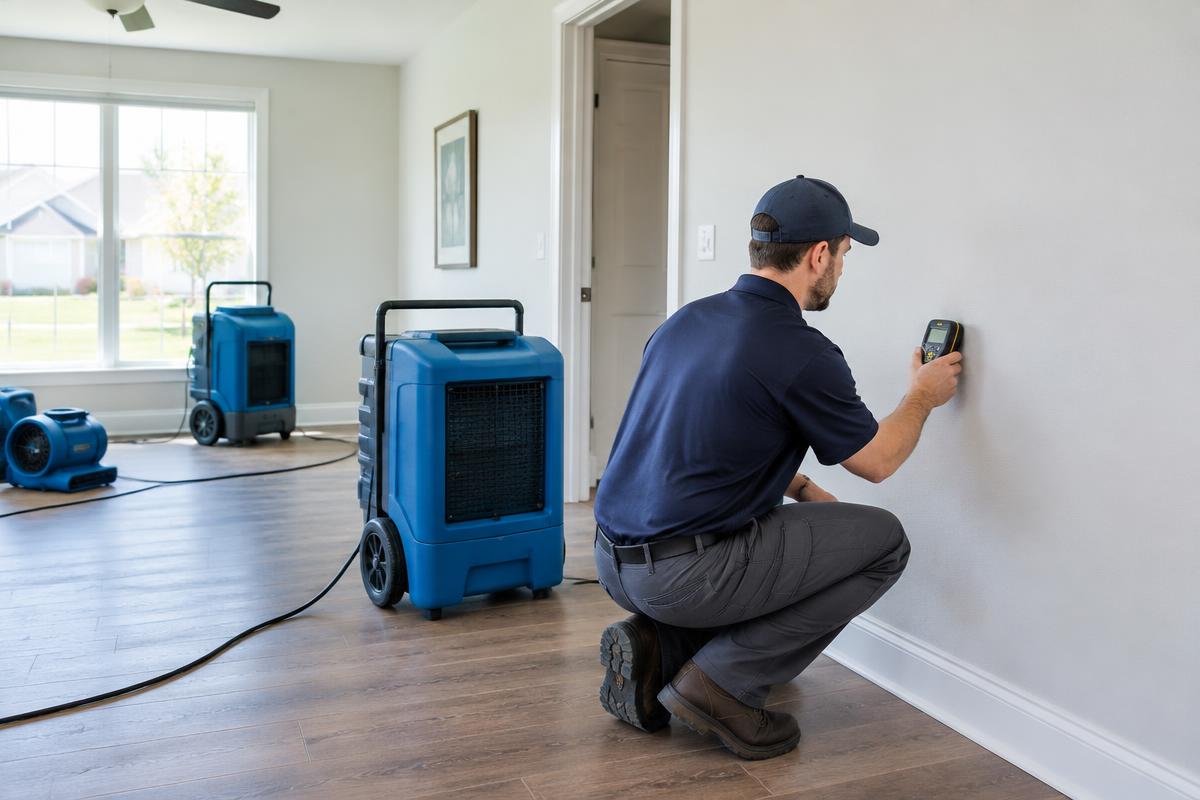
Standing water calls for professional water extraction in Euless. After removal, structural drying and dehumidification addresses moisture retained in walls, subfloors and other materials. A floor that feels dry on top may still be wet underneath.
For stormwater intrusion or widespread indoor flooding, request flood cleanup and explain the source. For wastewater from a drain or toilet backup, ask about sewage backup cleanup. The appropriate plan depends on contamination, affected materials and the extent of the loss—not just the size of the puddle.
The EPA recommends drying water-damaged areas and items within 24–48 hours to help prevent mold growth. That is prevention guidance, not a guarantee that everything can be saved or that every property will dry within two days. Professional drying may take longer, and moisture readings help guide decisions.
Before the first day ends: confirm the next steps
Check that the source has been addressed, unsafe rooms remain off limits, and you have a record of the damage. Ask whoever inspects the property which materials are wet, what can be restored, whether removal is needed and how drying progress will be checked. Avoid painting, replacing trim or closing wall cavities before the area is assessed and adequately dried.
Request water damage help in Euless, TX
For guidance on water damage restoration in Euless, call (817) 330-7905 or request service online. Share the water source, the rooms affected and any safety concerns. If the situation is not an immediate emergency, Damage Photo Check can help you organize your next steps while you arrange an inspection.
Source: EPA: A Brief Guide to Mold, Moisture and Your Home. This guide provides general information, not an inspection, electrical assessment or insurance coverage decision.