Euless homeowner guide · Hiring help
How to Choose a Water Damage Restoration Company in the Mid-Cities
Published
An active leak can make every hiring decision feel urgent. You can arrange emergency stabilization while still asking practical questions about the contractor, the work and the terms. For Euless and nearby Mid-Cities homeowners, a clear scope matters more than a bold arrival or price promise.
Call (817) 330-7905Separate the website from the contractor you hire
This website connects homeowners with independent service contractors; it is not a guarantee of their work. Confirm the legal business name of the company that will attend, who is responsible for the work and who will invoice you. Verify applicable licensing and insurance with the contractor and relevant authorities.
Texas licensing requirements vary by trade and work performed. Do not treat a general statement that a company is licensed as proof that it is authorized for plumbing, electrical work or regulated mold services. Ask for the specific credentials relevant to your scope and check them independently.
Ask what the initial visit includes
A useful assessment identifies the source, affected materials, contamination concerns and retained moisture. Ask whether the provider can arrange extraction and drying, whether another trade must repair the source, and what work is excluded. Restoration equipment does not fix a failed supply line or roof.
Ask how unsafe areas will be handled and whether you can remain in the home. An assessor should not promise that a photo can identify every hidden hazard. Clarify any inspection or emergency-service charges before authorizing a visit or work.
- Who will assess moisture and explain the findings?
- What work needs immediate authorization, and what can wait?
- Are removal, disposal, cleaning and reconstruction separate items?
- How will you protect unaffected rooms and belongings?
Compare scope, not just a bottom-line amount
Two proposals can cover different work. One may include carpet-pad removal and daily monitoring while another covers only extraction and equipment placement. Request a written scope with labor, equipment, monitoring, disposal and repair responsibilities clearly described.
Ask how changes will be approved if concealed damage appears. Confirm the equipment billing method and what supports extending drying. Avoid signing incomplete documents or relying on a verbal assurance that your insurer will pay every charge.
Look for measured drying and clear communication
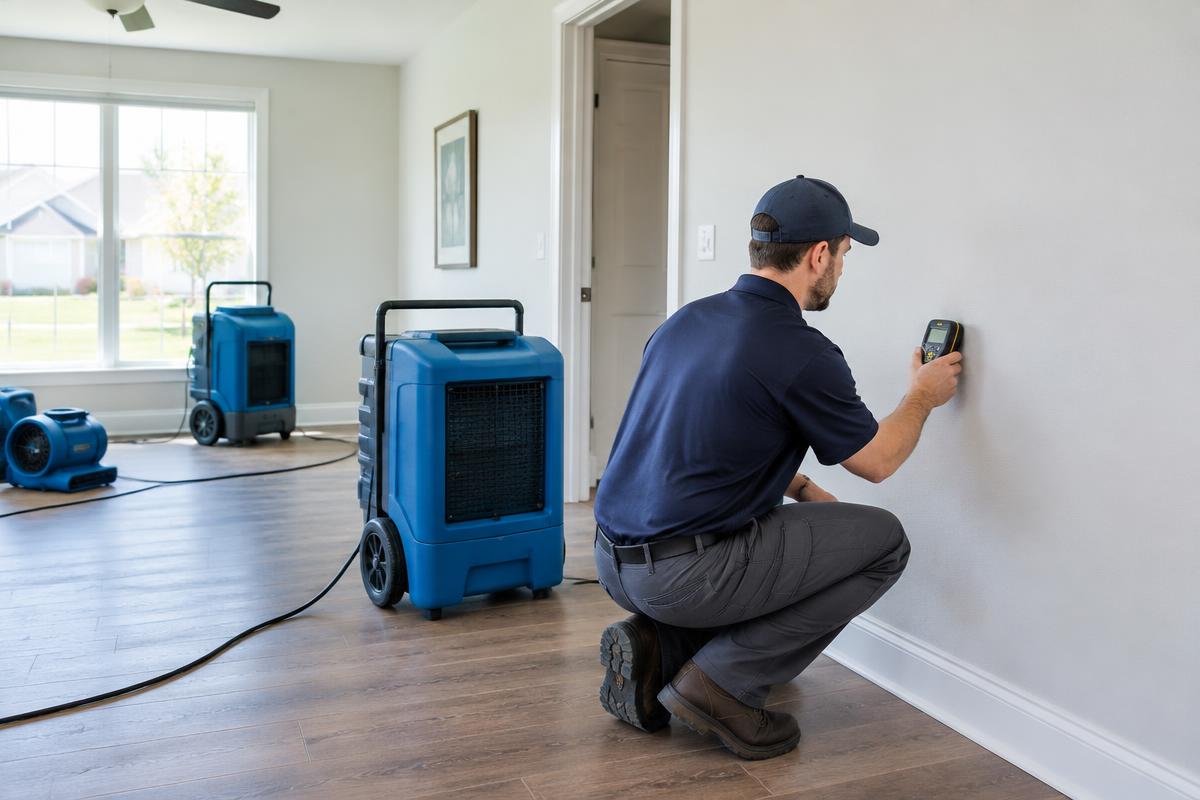
Ask which materials will be checked, how readings will be recorded and what criteria will support completion. A good conversation explains why hidden layers may need access or removal and why appearance alone does not establish dryness.
Agree on updates, access, noise and safety arrangements. Know whom to contact if water reappears or equipment stops. Certification can be relevant, but a logo alone does not establish workmanship, insurance or authorization for every part of the job.
Handle contracts, payment and claims carefully
Read the contract, payment schedule, cancellation terms and any assignment or authorization language before signing. Discuss unfamiliar insurance-related documents with your insurer or a qualified adviser. Coverage depends on your policy and the loss; the contractor should not guarantee reimbursement.
TDI cautions homeowners to be wary of pressure and contractors demanding full payment before work is completed. Keep copies of agreements, approved changes, photos and receipts. If feasible, compare options for nonemergency repairs without delaying necessary safety measures or water removal.
Use references without assuming they prove everything
Ask the actual contractor for genuine recent references and permission to view relevant project records. Verify reviews across independent sources and consider whether complaints show a pattern. We do not publish invented customer testimonials or represent illustrative images as completed client projects.
Before work starts, confirm the responsible company, contact person, written scope and expected updates. Those details make the relationship clearer even when the emergency itself leaves little time to plan.
Organize your next steps with Damage Photo Check
Share photos taken from a safe, dry location and describe what happened. Damage Photo Check suggests general safety steps and a potentially appropriate service. It cannot detect hidden hazards, confirm contamination, determine insurance coverage or replace an on-site inspection. Never enter a dangerous area to take photos.
Open Damage Photo CheckRequest restoration help in Euless and the Mid-Cities
For water damage restoration in Euless, call (817) 330-7905 or Request Service online. Describe the source, when you discovered the water, affected rooms and any safety concerns. Inspection and moisture readings help determine the appropriate scope; a photo alone cannot establish it.
Visit our Euless water damage restoration homepage for service options, or read what to do in the first 24 hours after water damage and all homeowner guides.
Sources and limitations
- Texas Department of Insurance: Home damaged by a storm FAQs
- FEMA: Beware post-disaster contractor fraud
General homeowner information, not an inspection, engineering assessment, health diagnosis or insurance coverage decision. Follow emergency responders’ instructions and obtain qualified advice for your property.