Euless homeowner guide · Flood cleanup
Flooded Basement Cleanup: What’s Salvageable and What’s Not in Euless
Published
A flooded basement is not simply a room that needs mopping. Water can hide electrical hazards, contamination and pressure against foundation walls. Many Euless homes do not have basements; this guide is for properties that do, with salvage principles that also apply to flooded ground-floor rooms.
Call (817) 330-7905Start outside the affected area
Do not walk through standing water to reach a breaker, sump pump or belongings. Wet electrical systems need qualified assessment, even when the power appears off. Keep children and pets away. Leave a property with sagging ceilings, shifting walls, a gas smell or other immediate danger; call emergency services from a safe location.
Take photographs only from safe, dry areas. Note when the flooding started and whether the source was a plumbing leak, sewage backup or water entering from outside. Clear-looking water is not proof that it is safe to touch.
Why basement pumping needs a plan
When soil around a foundation remains saturated, outside water pressure can push inward against basement walls. Removing indoor water too quickly may leave that pressure unbalanced and damage the structure. FEMA cautions against pumping flooded basements without accounting for surrounding conditions.
Do not choose a pumping rate from an online rule of thumb. Have a qualified professional assess exterior water levels, foundation condition and the source before removal. A sump pump cannot fix structural damage, an ongoing sewer backup or unsafe wiring.
What may be salvageable
Solid, nonporous items such as some metal tools, glass and hard plastic may be cleanable if their surfaces are accessible and they can be treated appropriately. Solid wood sometimes can be restored, but swelling, finishes, joints and contamination matter. Separate decisions about sentimental value from decisions about safe reuse.
- Photograph belongings and record a description before disposal when safe.
- Ask for a material-by-material assessment rather than a promise that everything can be saved.
- Leave wet appliances and electronics unplugged until a qualified professional checks them.
- Do not store contaminated belongings in occupied rooms while waiting for an insurance decision.
What often needs removal
Floodwater or sewage can contaminate carpet pad, insulation, drywall paper, upholstered furniture and other porous materials throughout their thickness. These commonly require removal rather than surface cleaning. Swollen particleboard and delaminated flooring may also be beyond practical restoration.
Even after a clean supply-line leak, prolonged moisture can change the salvage decision. The EPA’s 24–48 hour drying guidance is a mold-prevention target, not a guarantee that every wet item is safe afterward. Avoid disturbing suspected mold or tearing out contaminated material without appropriate containment.
Dry the structure before rebuilding
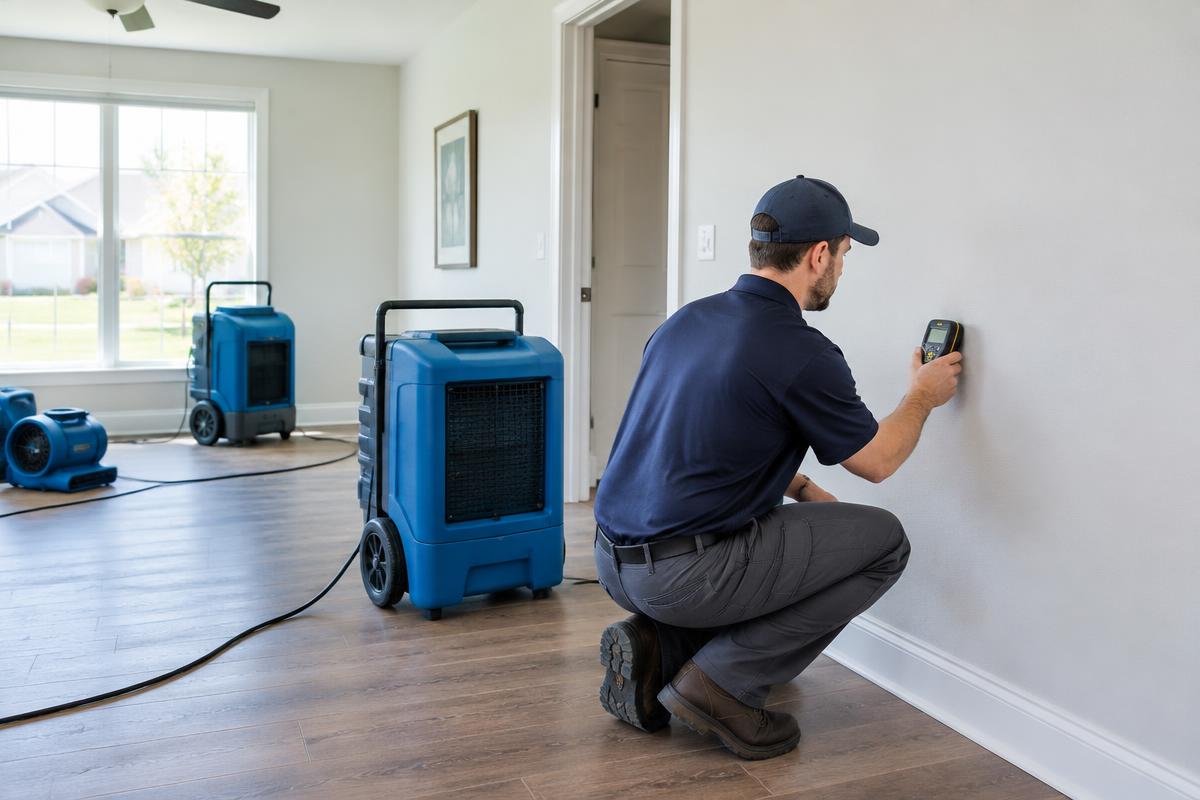
After safe water removal and any necessary cleaning or material removal, moisture can remain in wall cavities, framing and subfloors. Air movers and dehumidification must be selected for the conditions; fans should not blow across untreated contaminated materials.
Ask which materials will be measured, how readings are recorded and what criteria will support rebuilding. Do not install new trim, insulation or flooring simply because exposed surfaces look dry. Address the original entry point as well, or the next storm or leak may repeat the damage.
Organize your next steps with Damage Photo Check
Share photos taken from a safe, dry location and describe what happened. Damage Photo Check suggests general safety steps and a potentially appropriate service. It cannot detect hidden hazards, confirm contamination, determine insurance coverage or replace an on-site inspection. Never enter a dangerous area to take photos.
Open Damage Photo CheckRequest restoration help in Euless and the Mid-Cities
For flood cleanup in Euless, call (817) 330-7905 or Request Service online. Describe the source, when you discovered the water, affected rooms and any safety concerns. Inspection and moisture readings help determine the appropriate scope; a photo alone cannot establish it.
Visit our Euless water damage restoration homepage for service options, or read what to do in the first 24 hours after water damage and all homeowner guides.
Sources and limitations
General homeowner information, not an inspection, engineering assessment, health diagnosis or insurance coverage decision. Follow emergency responders’ instructions and obtain qualified advice for your property.