Euless homeowner guide · Flood cleanup
Flooded House in Euless? A Step-by-Step Cleanup Guide
Published
A flooded house needs more than fast mopping. The safest cleanup order depends on electricity, structural conditions and whether the water came from plumbing, sewage or outside. Start by keeping people safe; do not enter a hazardous room just to save belongings.
Call (817) 330-79051. Check whether entry is safe
Stay out if there are wet electrical systems, sagging ceilings, shifting walls or water around appliances. Do not walk through water to reach a breaker panel. If there is an immediate threat, leave and call emergency services from a safe place. Follow any official evacuation or reentry instructions.
Outdoor floodwater and sewage can contain biological and chemical hazards. Keep children, pets and vulnerable occupants away. Clear water is not proof of cleanliness, and a room that looks stable can still have concealed damage.
2. Identify and control the source
For an accessible plumbing leak, shut off the fixture or main supply from a dry, safe location if you know how to do so. Arrange plumbing repair before restarting the supply. For storm intrusion, do not climb onto a wet roof or enter a damaged attic.
If the source is unknown or a sewer backup is continuing, tell the restoration provider and relevant utility or plumber. Pumping out visible water while the source continues may not resolve the loss. If a basement is involved, exterior groundwater and foundation pressure require assessment before pumping.
3. Create a record without delaying urgent safety work
Photograph affected rooms and belongings from safe areas. Record the discovery time, source if known and actions taken. Contact your insurer to ask about documentation and claim requirements. Do not wait for a coverage decision to address immediate dangers or an active leak.
- Keep receipts for emergency work and necessary temporary arrangements.
- Ask for an itemized scope and updates if hidden damage changes the work.
- Document damaged belongings before disposal where safe.
- Do not retain contaminated materials inside living areas merely for a photograph.
4. Remove water and address contamination
Extraction methods depend on the amount of water, materials and access. Do not use a household vacuum. Wet electrical equipment needs qualified assessment. Where sewage or outdoor floodwater is involved, appropriate containment, cleaning and porous-material removal may be needed before drying.
Fans should not blow across untreated contaminated materials. Avoid mixing cleaning products or scrubbing suspected mold without a plan. Carpet padding, insulation and other porous layers may be unsafe or impractical to restore even if surface stains are removed.
5. Dry hidden layers and monitor progress
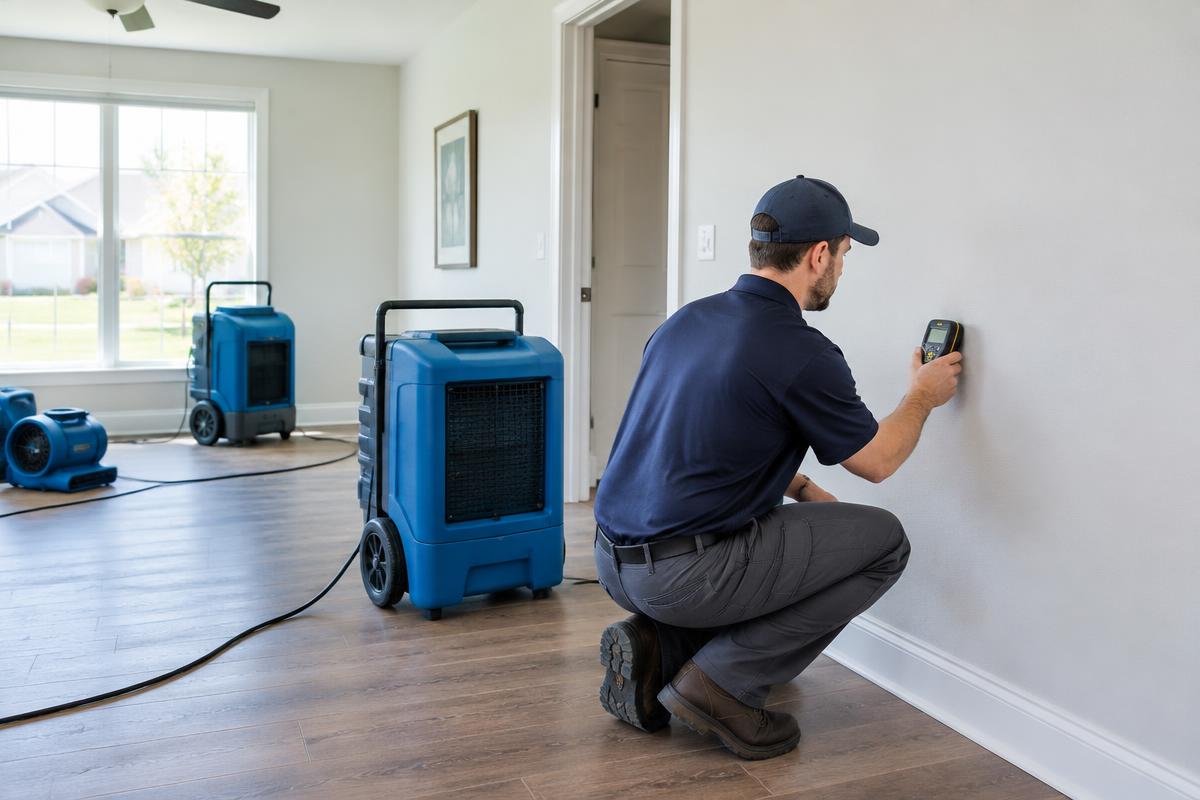
Water can collect under flooring, inside cabinets and behind baseboards. The drying plan should consider those layers, not just the visible wet area. Air movement and dehumidification must be appropriate for the conditions and supported by material moisture checks.
The EPA recommends drying water-damaged materials within 24–48 hours to help prevent mold. Treat this as a reason for prompt action, not a guarantee that all assemblies will dry within two days. Ask what completion criteria will be used and what happens if progress stalls.
6. Repair after cleanup and drying are verified
Do not cover damp material with new drywall, paint or flooring. Confirm that the source has been addressed, required cleaning and removal are complete and the substrate is ready for repair. Separate emergency stabilization from reconstruction so you understand what is included.
Review drainage or plumbing weaknesses that contributed to the event. Save final moisture records, photos, invoices and warranties supplied by the contractor. If new odors or staining appear later, request reassessment instead of concealing them with finishes.
Organize your next steps with Damage Photo Check
Share photos taken from a safe, dry location and describe what happened. Damage Photo Check suggests general safety steps and a potentially appropriate service. It cannot detect hidden hazards, confirm contamination, determine insurance coverage or replace an on-site inspection. Never enter a dangerous area to take photos.
Open Damage Photo CheckRequest restoration help in Euless and the Mid-Cities
For flood cleanup in Euless, call (817) 330-7905 or Request Service online. Describe the source, when you discovered the water, affected rooms and any safety concerns. Inspection and moisture readings help determine the appropriate scope; a photo alone cannot establish it.
Visit our Euless water damage restoration homepage for service options, or read what to do in the first 24 hours after water damage and all homeowner guides.
Sources and limitations
General homeowner information, not an inspection, engineering assessment, health diagnosis or insurance coverage decision. Follow emergency responders’ instructions and obtain qualified advice for your property.