Euless homeowner guide · Structural drying
How Long Does Structural Drying Take in Euless? What to Expect Day by Day
Published
Structural drying is complete when affected materials reach appropriate moisture goals—not when a timer runs out. Your Euless home’s water source, construction, amount of water and access to hidden layers all influence the schedule.
Call (817) 330-7905The first visit: assess and stabilize
The initial priorities are safety, controlling the source and identifying affected areas. Standing water may need extraction before equipment can effectively dry retained moisture. Contaminated water can require cleaning, containment and removal of porous materials before air movement is appropriate.
Ask which rooms and assemblies are wet, how readings will be recorded and whether the scope includes separate plumbing or electrical repairs. An initial plan can change as hidden moisture is discovered. A sight-unseen promise of a fixed number of days is not a substitute for assessment.
Early drying: establish equipment and moisture goals
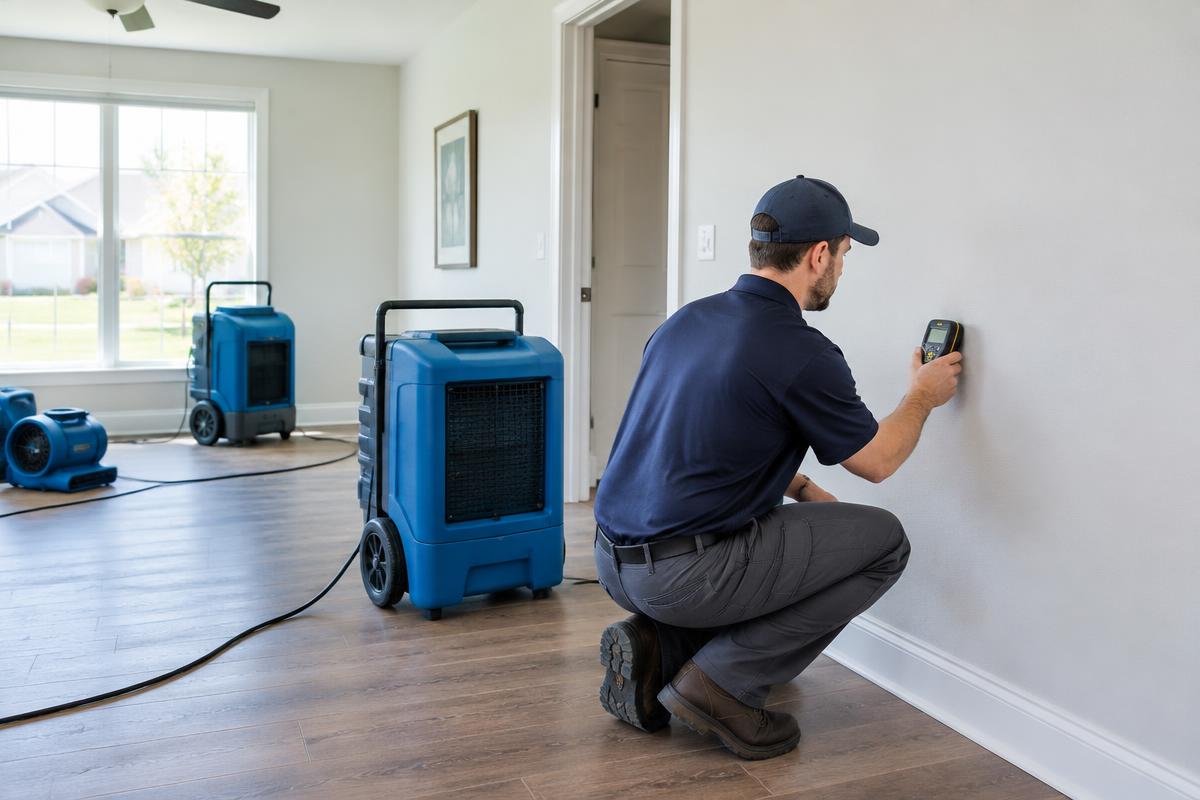
Once conditions allow, air movers support evaporation and dehumidifiers remove moisture from the air. Equipment selection depends on the space, materials and environmental conditions. Technicians may need access behind baseboards, beneath flooring or inside cavities; some damaged layers cannot reasonably be dried in place.
The EPA advises drying water-damaged areas within 24–48 hours to help prevent mold. This is prevention guidance and a reason to act promptly, not a guarantee that every wall or subfloor will finish drying in two days.
Following days: check trends rather than appearances
Material readings and temperature and humidity measurements help show whether the drying plan is working. The frequency of visits should be agreed with the provider. Equipment may be repositioned, the setup adjusted or additional wet layers exposed if progress is inadequate.
A floor that feels dry may still retain moisture beneath its surface. Ask for understandable progress updates: which materials are improving, which remain wet and what changes are needed. Do not turn off or move equipment without coordinating with the provider, unless an immediate safety issue requires it.
- Keep agreed access routes clear and children away from equipment.
- Discuss noise, power needs and safe occupancy with the provider.
- Report odors, fresh water or new staining promptly.
- Ask how drying records will be shared and what completion criteria apply.
What makes drying take longer
Dense wood, layered flooring, inaccessible cavities and saturated insulation can hold moisture longer than exposed surfaces. Ongoing leaks or humid air entering the room can also slow progress. Drying alone does not reverse swelling, delamination or contamination that makes removal necessary.
Local weather does not establish your indoor drying schedule. Opening windows on a humid Euless day may work against controlled dehumidification. Discuss the intended indoor conditions rather than assuming outdoor heat will speed the process.
Completion: verify before rebuilding
The provider should evaluate material readings against appropriate drying goals, considering material type and comparable unaffected areas where useful. Drying completion does not mean all repairs are complete. Flooring replacement, wall finishing and plumbing work may follow on separate schedules.
Before reconstruction, confirm that the source is repaired, required cleaning and removal are complete and the substrate is suitable for the planned materials. Save the final readings, scope, photos and invoices. Ask which remaining repairs belong to the restoration provider and which need another trade.
Questions to ask about your timeline
Ask what is driving the estimated duration and which findings would change it. Request a written explanation of equipment charges and monitoring arrangements, including what happens if another wet area is found. An estimate can be useful for planning as long as it is clearly provisional.
If readings stall or odors develop, ask for reassessment rather than adding days without explanation. Measured progress and a clear scope are more useful than a promise that every Euless property will follow the same day-by-day schedule.
Organize your next steps with Damage Photo Check
Share photos taken from a safe, dry location and describe what happened. Damage Photo Check suggests general safety steps and a potentially appropriate service. It cannot detect hidden hazards, confirm contamination, determine insurance coverage or replace an on-site inspection. Never enter a dangerous area to take photos.
Open Damage Photo CheckRequest restoration help in Euless and the Mid-Cities
For structural drying & dehumidification in Euless, call (817) 330-7905 or Request Service online. Describe the source, when you discovered the water, affected rooms and any safety concerns. Inspection and moisture readings help determine the appropriate scope; a photo alone cannot establish it.
Visit our Euless water damage restoration homepage for service options, or read what to do in the first 24 hours after water damage and all homeowner guides.
Sources and limitations
General homeowner information, not an inspection, engineering assessment, health diagnosis or insurance coverage decision. Follow emergency responders’ instructions and obtain qualified advice for your property.