Euless homeowner guide · Carpet and floors
Water in Your Carpet After a Leak: Dry It or Replace It in Euless?
Published
A carpet can feel nearly dry while its pad and the floor underneath remain soaked. Whether it can be restored depends on the water source, elapsed time, materials and contamination—not just whether the stain disappears.
Call (817) 330-7905Identify the source before trying to dry it
Water from a recently failed clean supply line is different from sewage, outdoor floodwater or an unknown source. Water can also pick up contaminants as it spreads through building materials. Tell the assessor where the leak began, how long it may have been active and whether other rooms or drains were involved.
Keep people and pets out of the area when contamination is possible. Do not use a household vacuum on water or plug equipment into wet outlets. Do not run fans over untreated sewage or unknown floodwater; moving air can spread contaminants.
When carpet drying may be practical
Promptly discovered clean-water damage may allow carpet restoration if extraction, cleaning as needed and drying can reach the full assembly. An assessment should include the carpet backing, pad and subfloor. The pad may need replacement even if the carpet itself can be retained.
The EPA advises drying water-damaged materials within 24–48 hours to help prevent mold. That guidance is not a deadline that guarantees salvage, nor does it establish a fixed drying duration. Thick padding, cabinets, restricted airflow and moisture under flooring can complicate the work.
When replacement is more likely
Sewage and outdoor floodwater create a different safety problem from a clean leak. Porous carpet and pad often cannot be adequately decontaminated and may require removal. Professional assessment is important; a shampoo, fragrance or visibly clean surface does not establish safe reuse.
Other reasons for removal include persistent odors, deteriorated backing, delamination, mold growth or materials that cannot be dried adequately. Do not assume that replacing only the visible wet patch solves contamination elsewhere in the pad.
- Ask whether the water source changes the cleaning or removal plan.
- Have hidden moisture beneath the carpet checked.
- Document damaged carpet and pad before safe disposal.
- Keep affected rooms separate from clean living areas.
Why a box fan alone may not solve it
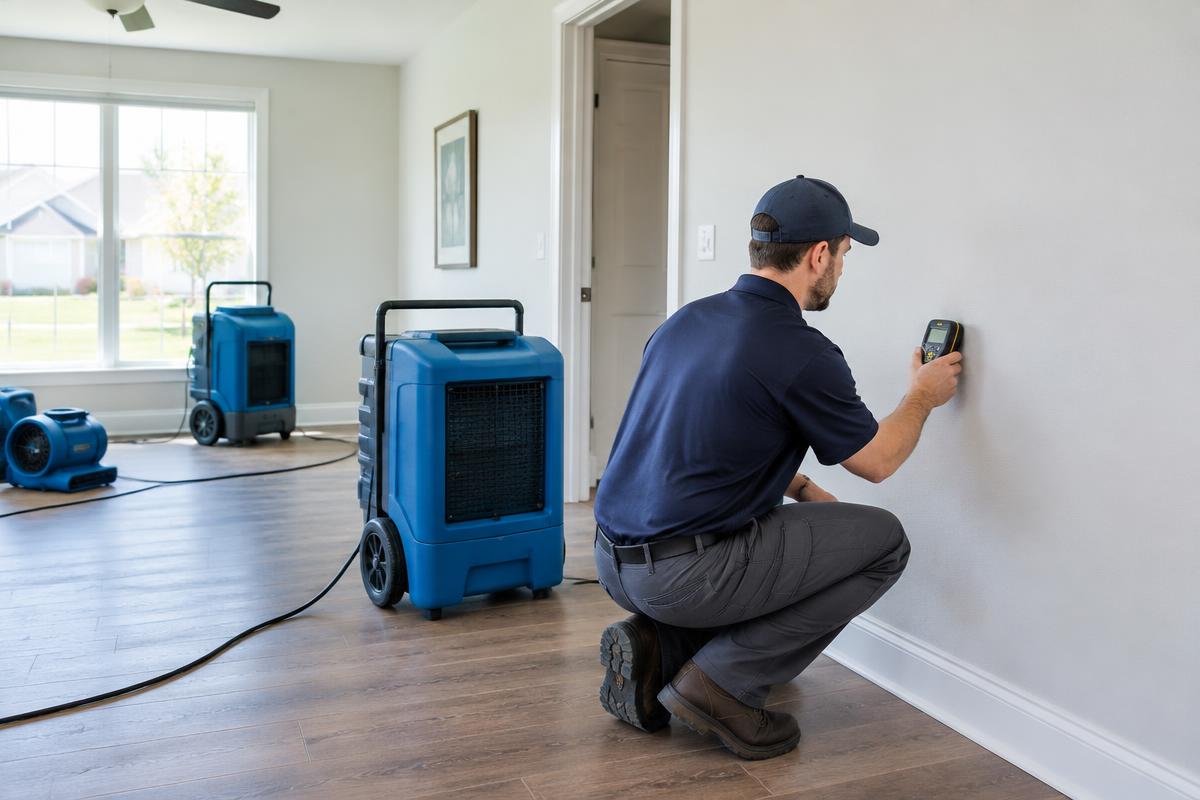
A fan moves air but does not remove the trapped water in padding or control room humidity on its own. Drying often starts with extraction, followed by appropriately sized air movement and dehumidification. Saturated pad or inaccessible layers may prevent a surface-only approach from working.
Weather matters too. Opening windows during humid North Texas conditions can add moisture rather than help. Ask the drying professional how temperature, humidity and material readings will be managed instead of relying on how the room feels.
Check the floor before reinstalling carpet
Wood subfloors can swell; moisture may collect along walls, under tack strips and inside closets. Concrete can also retain moisture relevant to new floor installation. Inspect adjoining materials, including baseboards and cabinet edges, rather than assuming the damage ends at the visible carpet stain.
Before replacement, confirm that the leak is repaired, required cleaning is complete and the substrate meets appropriate drying and flooring-installation criteria. Keep moisture records and the agreed scope. A new carpet placed over a damp floor can conceal an unresolved problem.
Organize your next steps with Damage Photo Check
Share photos taken from a safe, dry location and describe what happened. Damage Photo Check suggests general safety steps and a potentially appropriate service. It cannot detect hidden hazards, confirm contamination, determine insurance coverage or replace an on-site inspection. Never enter a dangerous area to take photos.
Open Damage Photo CheckRequest restoration help in Euless and the Mid-Cities
For structural drying & dehumidification in Euless, call (817) 330-7905 or Request Service online. Describe the source, when you discovered the water, affected rooms and any safety concerns. Inspection and moisture readings help determine the appropriate scope; a photo alone cannot establish it.
Visit our Euless water damage restoration homepage for service options, or read what to do in the first 24 hours after water damage and all homeowner guides.
Sources and limitations
General homeowner information, not an inspection, engineering assessment, health diagnosis or insurance coverage decision. Follow emergency responders’ instructions and obtain qualified advice for your property.